
What is a Content Cluster and Why Do SEOs Need It?
A content cluster (also known as a topic cluster) is a method of organizing website content around a single core topic. Instead of publishing unrelated articles, you create a central hub page called a Pillar Page surrounded by multiple detailed subtopic articles called Cluster Content. Understanding how to build a content cluster helps search engines recognize your site as an authoritative source in your niche.
According to research from the Ahrefs Blog, a structured content hierarchy allows search crawlers to scan and index pages more efficiently. When users search for broader topics, internal links seamlessly guide them deeper into specific subtopics. This structured approach provides sustainable search visibility compared to optimizing standalone keywords.
For instance, if you run an SEO service and want to rank for how to build a content cluster, publishing a single blog post will rarely guarantee long-term results. You need an interconnected network of content covering concepts, step-by-step workflows, internal link mapping, and performance tracking.
Benefits of Using a Content Cluster Strategy
The primary advantage of a content cluster model lies in its ability to distribute internal link equity across related pages. When one article within the cluster ranks well, it helps push supporting satellite pages higher in search results. Over time, your entire website builds topical authority with Google.
Boost Conversion Rates and User Experience
Search visitors generally look for complete solutions to specific problems. A topic cluster keeps readers engaged on your website because contextual internal links direct them to logical follow-up articles. Higher on-site dwell time naturally reduces bounce rates and fosters trust.
Optimize Content Creation Budgets and Workflow
Rather than guessing topic ideas weekly, a topic cluster gives you a structured content roadmap. Your editorial team avoids duplicate content and topic overlap. You can also leverage intelligent article writing features to streamline content draft generation.
| Criterion | Traditional Model | Content Cluster Model |
|---|---|---|
| Structure | Disjointed blog pages | Organized topic hierarchy |
| Internal Link | Random or minimal | Strategic bidirectional links |
| Ranking Potential | Low, high keyword competition | High, covers complete search intent |
5 Steps on How to Build a Content Cluster
Learning how to build a content cluster requires a methodical process. Proper initial research prevents hours of structural editing later. Here is the step-by-step workflow for modern web publishers.
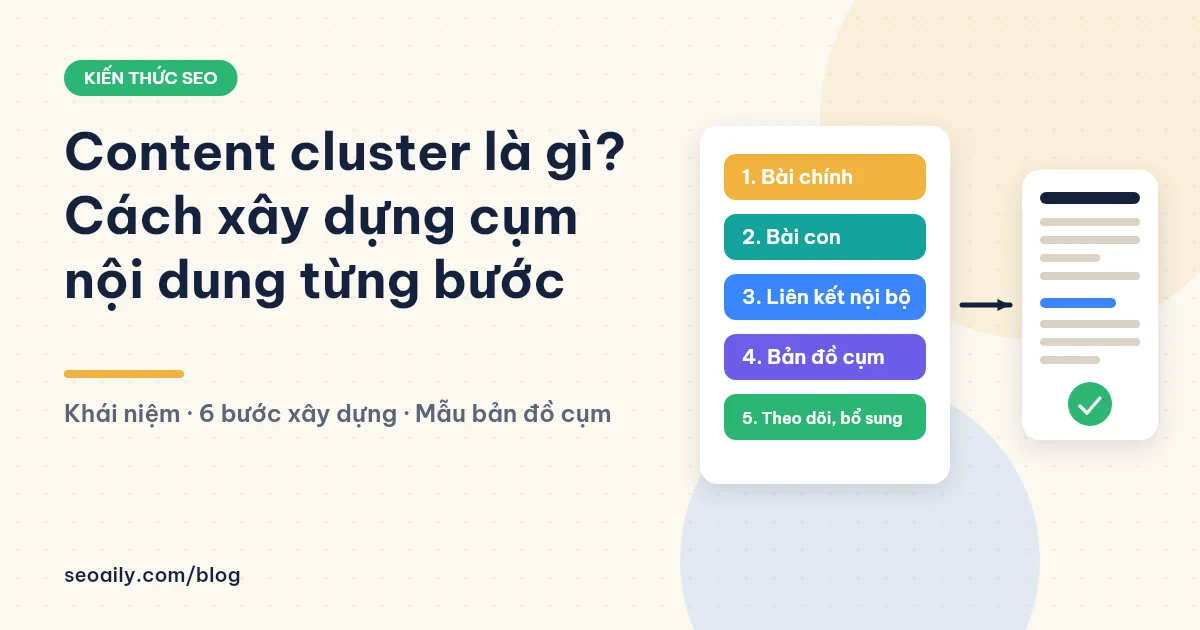
Step 1: Research and Select a Core Pillar Topic
Your pillar topic must be broad enough to branch off into multiple sub-articles, yet targeted enough to attract relevant search volume. Examples include "SEO Strategy" or "Content Marketing." Use keyword research tools to evaluate search demand and conversion potential before committing to a topic.
Step 2: List Your Cluster Content Subtopics
From your core topic, gather specific questions and long-tail keywords. Key types of satellite content to schedule include:
- Detailed definitions of specific technical terms
- Actionable step-by-step execution guides
- Tool roundups and resource lists
- Real-world case studies and practical breakdowns
Step 3: Map Out Your Internal Linking Strategy
Internal links are the foundation of any successful cluster strategy. The main Pillar Page should link out to all supporting cluster articles, and every cluster article must link back to the Pillar Page using descriptive anchor text. This clear path signals to search engines which page serves as the primary topic authority.
Step 4: Produce and Optimize High-Quality Content
Focus on creating original, practical content rather than copying existing search results. You can assess your draft quality using an on-page SEO grading tool to ensure technical compliance. High editorial standards directly influence how quickly your cluster gains search traction.
Step 5: Measure, Update, and Scale the Cluster
After publishing, monitor keyword rankings and incoming traffic for each URL within the cluster. Refresh underperforming satellite articles with updated data and new internal links. You can also review the user guide to streamline content workflows.
Common Mistakes When Implementing Content Clusters
A frequent mistake in cluster development is publishing multiple posts without establishing clear internal link architecture. Standalone pages fail to pass link juice, leaving individual URLs struggling on search engine results pages (SERPs). Another error is producing thin content that fails to resolve user intent.
When learning how to build a content cluster, maintain natural keyword distribution throughout your text. Avoid keyword stuffing, which hurts readability and triggers search engine penalties. Focus on delivering actionable value in every paragraph.
Ready to streamline your content operations? Explore the intelligent SEO tools at Seoaily to optimize your content workflow. Check out the pricing plans to find the best option for your business scale.
Frequently Asked Questions
Q: How is a content cluster different from traditional keyword targeting?
A: Traditional SEO focuses on optimizing individual articles for isolated keywords without systematic internal linking. A content cluster organizes content into broader topic hubs connected by logical internal links, significantly improving overall domain authority and organic rankings.
Q: How long does it take for a content cluster to rank on Google?
A: Ranking speed depends on keyword difficulty and domain authority. Generally, a well-planned content cluster begins showing noticeable traffic improvements within 3 to 6 months of execution.
Q: Should I update cluster articles periodically?
A: Yes, regular updates are essential to maintain top positions on SERPs. Reviewing satellite articles quarterly to add new information and refresh internal links helps preserve your search visibility.
Q: How do I select the right topic for a Pillar Page?
A: The Pillar Page should cover a broad topic at a comprehensive, high level. It typically targets the main keyword with the highest search volume across the entire topic cluster.
Q: What is the ideal number of cluster articles per topic?
A: There is no fixed limit, but an effective cluster typically consists of 5 to 15 well-crafted articles. The main priority is satisfying all relevant search intents related to the main topic.